Fairfax County Court serves as the primary judicial authority in Fairfax County, Virginia. It manages a variety of legal matters, including civil disputes, criminal cases, and family law issues. Residents rely on this court for fair decisions and proper enforcement of the law. The court operates under Virginia state law to maintain order and justice.
Fairfax County Court provides structured legal processes through its divisions, such as Circuit Court, General District Court, and Juvenile and Domestic Relations Court. Each division addresses specific cases to ensure efficient resolution. The court also offers public access to records, calendars, and legal procedures. It plays a vital role in supporting the local judicial system and community safety.
How to Search Fairfax County Court
Accessing Fairfax County court information is straightforward using official online tools. Residents, attorneys, and researchers can view case details, court schedules, and public records safely and efficiently.
Official Fairfax County Courts
The main gateway for court information is the Fairfax County Judicial System official website:
https://www.fairfaxcounty.gov/courts
Case Search Tools
To search cases online, use the Case Information System available from the official courts page. The system lets you search public judicial records by multiple criteria:
https://www.fairfaxcounty.gov/courts/case-information
Search options you’ll find here:
- Case Number Search
- Enter the exact case number.
- Best for finding a specific case.
- Name Search
- Type a person’s last name (and first name optional).
- Results show all matching cases across selected courts.
- Court Type Selection
- Choose the right court before searching:
- Circuit Court
- General District Court
- Juvenile and Domestic Relations District Court
- Choose the right court before searching:
Public Access to Judicial Records
The court website provides views of public records and dockets. For some records, basic information is free; for detailed documents, you might need to request certified copies at the appropriate clerk’s office.
Public Records Page:
https://www.fairfaxcounty.gov/courts/public-records
Here you can view:
- Case summaries
- Hearing dates
- Judge assignments
- Filing history
This page also explains which records are available online and which must be accessed in person.
Online Court Calendars and Schedules
To see daily court schedules or upcoming hearings:
https://www.fairfaxcounty.gov/courts/calendar
This page lets you:
- Pick a court
- Enter a date range
- View scheduled sessions
Jury Duty and Court Services
For jury information, forms, and instructions:
https://www.fairfaxcounty.gov/courts/jury
Here you can:
- Check jury status
- Print summons notices
- Learn about service requirements
Clerk’s Office and Filing Services
If you need detailed case papers, forms, or certified documents, visit the Clerk’s office section:
https://www.fairfaxcounty.gov/courts/clerk-circuit-court
(Clerk of the Circuit Court)
https://www.fairfaxcounty.gov/courts/district-court-clerks
(Clerks of the District Courts)
These pages explain:
- Filing requirements
- Fee schedules
- Contact details
- Walk‑in services
What Is Fairfax County Court System
The Fairfax County court system is the local judicial structure that handles civil, criminal, family, and traffic cases within Fairfax County, Virginia. It works as part of the larger Virginia court system, following state laws and procedures.
The system supports legal proceedings at the county level and manages cases from filing through resolution. It focuses on fair hearings, proper court administration, and orderly case flow.
How the Fairfax County Court System Works
The Fairfax County courts operate through a clear court hierarchy that assigns cases based on type and seriousness. Each court has a defined role, which helps the judicial system function smoothly and predictably.
Key courts within Fairfax County include:
- General District Court – Handles traffic cases, misdemeanors, small claims, and civil cases with lower dollar amounts.
- Circuit Court – Manages serious criminal cases, major civil disputes, family matters, and appeals from lower courts.
- Juvenile and Domestic Relations District Court – Covers cases involving minors, custody, support, and family-related issues.
Court administration staff schedule hearings, manage filings, and support judges during legal proceedings. Judges apply Virginia law during hearings, trials, and sentencing. Clear procedures help parties know what to expect at each step.
This structured setup reduces delays and keeps cases moving forward. Clear court roles support consistency across Fairfax County.
Relationship With the Virginia Court System
The Fairfax County court system operates within the statewide Virginia judicial system. State law sets the rules, timelines, and authority for all county-level courts.
Fairfax County courts connect with Virginia courts in several ways:
- Appeals from the Circuit Court move to the Court of Appeals of Virginia or the Supreme Court of Virginia
- Judges follow statewide court rules and legal standards
- Court administration follows policies set by the Virginia Supreme Court
This relationship keeps rulings consistent across counties. It supports equal treatment under the law across Virginia.
Role of County-Level Courts in Fairfax County
County-level courts serve as the first point of contact for most legal disputes. They resolve issues that affect daily life, property, family matters, and public safety.
Their main functions include:
- Processing filings and hearing cases
- Managing trials, pleas, and settlements
- Recording judgments and court orders
Below is a simple view of the court hierarchy:
| Court Level | Primary Role |
|---|---|
| District Courts | Entry-level cases and minor offenses |
| Circuit Court | Serious cases and appeals |
History of the Fairfax County Courthouse
The Fairfax County Court history reflects how local justice grew alongside the county itself. The courthouse changed locations and functions over time to meet legal and population needs.
This historic courthouse story shows steady court development shaped by government changes and community growth.
Early Beginnings of the Courthouse
Around 1742, Fairfax County established its first courthouse shortly after the county formed. At that time, court sessions took place in simple buildings that supported basic legal proceedings. These early structures marked the start of Fairfax County’s judicial heritage.
In 1752, county leaders moved the courthouse to Alexandria. This location served as a central hub for trade and government activity. The move helped courts operate closer to growing settlements. Legal records, trials, and land matters took place there for several decades.
Changes After the Creation of Washington, D.C. (1789–1800)
In 1789, the creation of Washington, D.C. changed county boundaries. Alexandria later separated from Fairfax County. This shift required a new permanent courthouse location within county limits.
By 1800, the county opened a new courthouse in Fairfax Courthouse, which remains the historic center of county justice. This site became the long-term home of county-level courts. It supported civil, criminal, and administrative cases as the population grew.
Courthouse Use and Judicial Expansion (1800–2008)
The original Fairfax Courthouse building served many purposes over time. It housed general court operations and later supported Juvenile Court functions until 2008. Court administration expanded as case volume increased.
During the 1980s, Fairfax County developed the Judicial Center nearby. This complex improved court efficiency and provided modern courtrooms. In 2008, a major expansion added space for new legal needs and improved public services.
Role of the Current Courthouse
Today, the courthouse and Judicial Center serve as the backbone of Fairfax County courts. They support trials, hearings, and court administration. This courthouse evolution shows how Fairfax County adapted its judicial system to serve the public effectively.
Types of Courts in Fairfax County
Fairfax County courts are organized through a clear structure that assigns cases based on seriousness and subject matter. Each court supports the county judicial system by handling specific legal proceedings.
This setup helps cases move through the system in an orderly way and supports fair outcomes for residents and businesses.
Fairfax County Circuit Court
The Fairfax County Circuit Court is the highest trial court serving Fairfax County. It functions within Virginia’s 19th Judicial Circuit and handles serious criminal and complex civil cases.
This court plays a central role in major legal proceedings that require formal hearings, jury trials, and detailed judicial review.
Court Position and Authority
- Part of the 19th Judicial Circuit of Virginia
- Holds broad trial-level authority
- Reviews cases beyond District Court limits
This position places the court at the core of county-level justice.
Criminal Jurisdiction
The court manages serious criminal matters that require full trials.
Handled criminal cases include:
- Felony cases
- Jury trials for major offenses
- Sentencing hearings after convictions
These cases often involve longer proceedings and detailed evidence review.
Civil and Family Jurisdiction
The Fairfax County Circuit Court hears higher-value and legally complex disputes.
Civil and family matters include:
- Civil litigation above District Court limits
- Divorce cases and related family disputes
- Child custody and spousal support hearings
Judges issue binding rulings that affect property, finances, and family rights.
Probate and Estate Matters
The court oversees probate matters tied to estates and wills.
Probate responsibilities include:
- Will validation
- Estate administration oversight
- Resolution of inheritance disputes
Appeals From District Court
The Circuit Court reviews appeals from District Court decisions.
Appeal cases may involve:
New trials based on appeal rights
Criminal convictions
Civil judgments
Fairfax County General District Court
The Fairfax County General District Court handles high-volume cases that require quick resolution. It focuses on everyday legal matters that affect residents, drivers, renters, and local businesses.
This court hears cases without juries. Judges decide outcomes based on evidence, testimony, and Virginia law.
Criminal and Traffic Matters
The court manages lower-level criminal cases that move through the judicial system at a faster pace.
Common case types include:
- Misdemeanor cases
- Traffic violations
- Local ordinance offenses
These cases usually involve fines, probation, or short-term penalties.
Civil and Small Claims Jurisdiction
The General District Court hears civil claims within set dollar limits.
Civil case coverage includes:
- Small claims up to $4,500
- General civil cases up to $25,000
- Debt collection and contract disputes
Landlord and tenant matters form a major part of the docket.
Housing and Eviction Cases
The court handles:
- Eviction filings
- Unlawful detainer actions
- Rent disputes
These cases move quickly due to housing impact. Clear procedures support timely rulings.
Juvenile and Domestic Relations District Court
The Fairfax County juvenile court focuses on cases involving minors and family relationships. It supports family law matters that require privacy and sensitive handling.
This court does not conduct jury trials. Judges review evidence and issue rulings
Family Law and Support Cases
Handled matters include:
- Child custody disputes
- Support cases, including child and spousal support
- Visitation rights
Court orders aim to protect children and promote stability.
Juvenile Matters
The court hears:
- Juvenile delinquency cases
- Status offenses involving minors
- Child protection proceedings
These cases follow legal standards set by Virginia law.
Court Jurisdiction and Case Types
The Fairfax County Virginia court system assigns cases based on legal authority, dollar value, and offense level. This structure keeps legal proceedings organized and efficient.
Each court handles defined case types to avoid overlap.
Civil Jurisdiction and Dollar Limits
Civil claims follow strict thresholds:
- Up to $4,500: Small Claims Division
- Up to $25,000: General District Court
- Above $25,000: Circuit Court
Higher-value cases move to the Circuit Court for full trials.
Criminal Jurisdiction Flow
Criminal cases follow a clear path:
- Misdemeanors start and end in General District Court
- Felonies begin in District Court for hearings
- Felony trials take place in Circuit Court
This process separates minor offenses from serious crimes.
Appeals Process
Appeals depend on court level:
- District Court decisions may move to Circuit Court
- Circuit Court appeals may advance to higher Virginia courts
Some appeals allow new trials rather than record review.
Which Court Handles What
| Case Type | Assigned Court |
|---|---|
| Traffic violations | General District Court |
| Evictions | General District Court |
| Small civil claims | Small Claims Court |
| Felony trials | Circuit Court |
| Divorce cases | Circuit Court |
| Child custody | Juvenile Court |
| Support matters | Juvenile Court |
Clerk of the Circuit Court
The Clerk of the Circuit Court Fairfax County serves as the official record keeper for the county’s highest trial court. This office supports court operations and protects public legal records.
The position is elected and carries an eight-year term, which reflects public trust and accountability.
Role and Legal Authority
The Clerk holds wide authority under Virginia law. The office works closely with judges, attorneys, and the public during court proceedings.
Primary responsibilities include:
- Probate authority for wills and estates
- Oversight of estate administration and guardianship cases
- Qualification of executors and trustees
This role plays a central part in managing life-event related legal matters.
Marriage Licenses and Property Records
The Clerk issues:
- Marriage licenses
- Deed recordings for property transfers
These services support both personal and real estate transactions across the county.
Court Records Custodian
The Clerk acts as the official record custodian for the Circuit Court. This duty includes:
- Maintaining civil and criminal case files
- Preserving historical court records
- Providing certified copies when requested
Accurate record keeping supports transparency and lawful court activity.
Clerk of the District Court
The Clerk of the District Court Fairfax County manages daily operations for lower courts. This office supports judges and handles high-volume case activity.
Clerks in District Courts receive appointments through the judiciary, rather than public elections.
Court-Specific Clerk Structure
Fairfax County uses different clerks for different courts, such as:
- General District Court
- Juvenile and Domestic Relations District Court
Each clerk team focuses on the needs of its assigned court.
Filing and Court Support Duties
Key duties include:
- Processing court filings
- Managing record maintenance
- Scheduling hearings and trials
Clerks support judicial officers during proceedings and maintain case flow. Their work keeps court sessions organized and timely.
Magistrates in Fairfax County
Fairfax County magistrates serve as independent judicial officers within the Virginia court system. They provide legal oversight outside normal court hours.
Their role supports public safety and lawful case initiation.
Warrants and Legal Orders
Magistrates have authority to issue:
- Arrest warrants
- Search warrants
- Criminal summons
They review facts presented by law enforcement and citizens before issuing orders.
Bail and Initial Hearings
Magistrates conduct:
- Bail hearings
- Initial case assessments after arrest
They decide bond conditions based on legal standards and risk factors.
Eligibility and Appointment Rules
Magistrates must meet strict requirements:
- Law-related education or equivalent experience
- Completion of state training programs
Specialized Courts and Programs
Specialized courts in Fairfax County focus on rehabilitation and accountability rather than punishment alone. These programs address root causes behind certain offenses and support long-term behavioral change.
They operate within the county court structure and follow strict eligibility standards.
Veterans Court
Veterans Court serves military service members who face criminal charges linked to service-related conditions. The program centers on alternative justice with a strong focus on treatment and stability.
The main purpose is to reduce repeat offenses by addressing issues tied to military service.
Eligibility rules include:
- Prior or current U.S. military service
- Charges approved by the court
- Willingness to follow treatment plans
Disqualifications may apply for:
- Certain violent offenses
- Serious repeat felony histories
Participants receive court monitoring, treatment support, and structured accountability. This veteran rehabilitation model aims to restore stability while protecting public safety.
Drug Court
Drug Court offers an alternative path for defendants with substance-related offenses. The program emphasizes substance abuse treatment over traditional sentencing.
Program length ranges from 4 to 24 months, based on progress and compliance.
Key requirements include:
- Substance dependency diagnosis
- Agreement to regular testing
- Court supervision and counseling
Expected outcomes:
- Reduced repeat offenses
- Improved treatment completion rates
- Structured reintegration into the community
This court uses alternative sentencing to support recovery through supervised rehabilitation programs.
United States District Court and Federal Jurisdiction
The United States District Court Eastern District of Virginia handles federal cases connected to Fairfax County. This court operates separately from county courts and follows federal law.
Fairfax County falls within the Alexandria Division of this federal district.
Federal Court Coverage Area
The Alexandria Division serves:
- Fairfax County
- Arlington County
- Loudoun County
- Several nearby cities
Judges in this court handle cases involving federal jurisdiction.
Federal vs County Court Differences
Federal courts manage:
- Federal criminal charges
- Constitutional issues
- Interstate disputes
- Federal agency cases
Fairfax County Courthouse Locations and Contact Information
Fairfax County residents can access several courthouse facilities depending on the type of legal matter. Each Fairfax County courthouse provides public services, case management, and court administration.
Knowing court locations helps individuals, attorneys, and businesses reach the right office efficiently. Below is a detailed guide to the main facilities
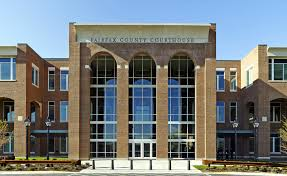
Fairfax County Courthouse – Chain Bridge Road
Location: 4110 Chain Bridge Road, Fairfax, VA 22030
Purpose: Primary courthouse for Circuit Court and General District Court cases
Services Available:
- Civil and criminal filings
- Jury trials and hearings
- Probate and estate administration
- Marriage licenses
The facility includes courtrooms, clerk offices, and public records access. Visitors should check operating hours before attending.
Fairfax City General District Court – Armstrong Street
Location: 4110 Armstrong Street, Fairfax, VA 22030
Purpose: Handles General District Court matters in Fairfax City
Services Available:
- Misdemeanor and traffic cases
- Small claims and civil disputes under $25,000
- Eviction proceedings
- Scheduling and court records access
This courthouse focuses on quick resolution of high-volume cases. Staff can assist with filing documents and court procedures.
Albert V. Bryan U.S. Courthouse – Alexandria
Location: 401 Courthouse Square, Alexandria, VA 22314
Purpose: Federal courthouse for the United States District Court Eastern District of Virginia
Services Available:
- Federal civil and criminal cases
- Bankruptcy filings and hearings
- Federal records access
- Courtroom proceedings under federal jurisdiction
This facility serves Fairfax County along with nearby jurisdictions in Northern Virginia. Federal cases differ from county matters, so check requirements before visiting.
Visiting Fairfax County Courthouses
- Check hours: Most courthouses operate Monday–Friday, 8:30 AM–4:30 PM.
- Bring identification for access to certain court services.
- Review court-specific rules online for filings and hearings.
- Use official contacts for scheduling, records requests, and payment inquiries.
Frequently Asked Questions About Fairfax County Court
Residents and visitors often have questions about how Fairfax County courts operate. This FAQ section provides clear guidance on common legal and procedural queries.
Are Fairfax County courts open to the public
Yes, most Fairfax County court proceedings are open to the public. This includes civil hearings, criminal trials, and family law sessions, except for cases involving juveniles or confidential matters. Public access ensures transparency and allows residents to observe the judicial process.
Which court handles which cases?
Case assignment depends on court jurisdiction and case type:
- Circuit Court: Felonies, high-value civil cases, divorce, probate, and appeals from District Court
- General District Court: Misdemeanors, traffic violations, civil claims under $25,000, and evictions
- Juvenile and Domestic Relations District Court: Child custody, support cases, family disputes, and juvenile matters
Choosing the correct court ensures efficient case handling and proper legal procedures.
Where are jury trials held?
Jury trials take place primarily in the Fairfax County Circuit Court. General District Courts and Juvenile Courts do not conduct jury trials. Circuit Court juries hear both criminal and civil cases, including felonies, divorces, and high-value civil disputes.
What is the role of the federal court?
The United States District Court Eastern District of Virginia, Alexandria Division, serves Fairfax County for federal cases. This court handles matters involving federal law, constitutional issues, and interstate disputes. Unlike county courts, federal courts manage cases such as federal crimes, bankruptcy, and federal agency matters.